A system for creating lasting cultural and economic value from all, for all.
ProjectArt is not a charity program bolted onto a library. It is an economic design. Five parties — youth, libraries, artists, communities and taxpayers — each hold something the others need and each are short of something the others have. Put them in one room, once a week, and every one of them gains at the lowest possible cost.
Smithian economics + game theory
ProjectArt is a non-zero-sum simultaneous game that benefits all participants at the lowest cost.
Three surpluses, sitting in the same country, never introduced.
Unlocking the power of libraries, unleashing creativity.
Value created for all, and from all.
Each participant contributes the resource they already have in surplus and receives the one they lack. Nobody is asked to give up anything they were using. That is what makes the game non-zero-sum — and what makes it repeatable in 17,000 buildings.
- Youth Gets a free, high-quality art class worth $3,000 a year — and brings friends and family with them.
- Library Receives $18,000 of after-school programming a year, new audiences, and becomes a cultural incubator.
- Artists Receives ~$17,000 in value: studio space, a salary and exhibition space — plus a career-legible residency.
- Community Measurable behavioural change: less crime, better test scores, a library that the neighbourhood uses again.
- Taxpayers Under-used public square footage is converted into service, avoiding a lifetime burden of $170,740 per disconnected young person.
The rent is already paid.
Community rooms sit empty in the exact hours children need somewhere to be. Using that space costs the taxpayer nothing new — it converts a standing opportunity cost into a service, and returns programming the library could never otherwise afford.
- Average US metro commercial rent
- $23.23 / ft²
- Average library community room
- 845 ft²
- ProjectArt usage of that room
- 50%
- Rent value unlocked, per branch, per year
- $9,823.50
- Teaching services returned to the branchmarket value: $200 / session × 90 hrs
- $18,000
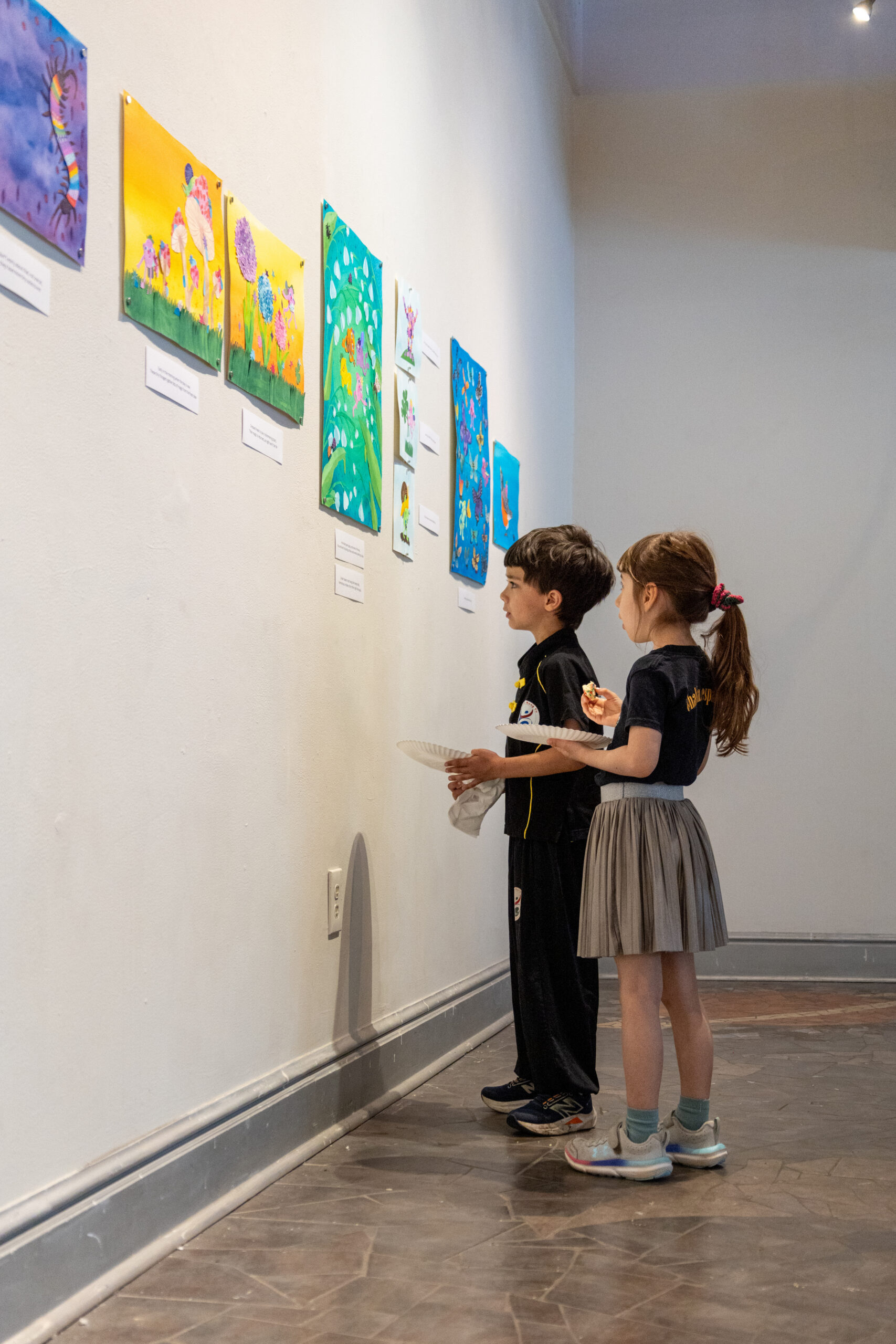
A residency that pays, in a city where studios don't exist.
Demand for studio space runs about five times availability. Every museum-exhibited artist has used residencies to move a career forward, yet only 29% of them are urban. We put the studio where the students are.
- Studio space
- $8,000
- Salary
- $6,000
- Exhibition space
- $2,000
- Total value, per artist, per year
- $17,000
3 to 6pm is the whole argument.
Only 18% of American children are in any after-school program. As many as 15 million go home to an empty house. Those hours are the peak window for juvenile crime and first experimentation with drugs, alcohol and sex — and the hours working mothers report worrying about most. Teens outside after-school programs are nearly three times more likely to skip class or use drugs.
SOURCES: US DEPT. OF LABOR; US CENSUS BUREAU / URBAN INSTITUTE (2000); FIGHT CRIME: INVEST IN KIDS (2002); YMCA OF THE USA (2001).
One art class, and the whole block moves.
Neighbourhood-level effects associated with sustained cultural access — the case for art as civic infrastructure, not enrichment.
The cost of doing nothing is already on the books.
A disconnected young person carries a measurable fiscal and social burden — lost earnings and taxes, criminal justice, health, welfare and lost productivity spillovers. Intervening in the after-school hours is the cheapest point in that curve.
SOCIAL BURDEN = Y + mCF + CV + mHF + HP + mWS + YG − mEF − EP
FISCAL BURDEN = T + CF + HF + WS + WF − EF
Art education is one of the best available services to mobilise change — a stable point where every player's best move is to keep playing.
- After-school programme value, $3k × 45 students
- $135,000
- Value added to each library
- $67,000+
- Artist residency value
- $18,000+
- Social and fiscal burden averted, per cohort
- $14k + $37k / student
- Total impact, per library
- $2.549M
Take rent to zero. Push management to the edges.
C = S + L + R + M Cprojectart = S + L + R̶ + ΔM
Supplies and teaching fees are close to fixed. Rent is the line that compounds every year — so we remove it entirely. Management is the other compounding line, so it is devolved: artists document their own classes, problems are solved locally, and the library already carries utilities, security, upkeep, insurance and local outreach.
- Design rule 01 Class is in the library Rent-free, trusted, walkable, and already open at 4pm.
- Design rule 02 The teacher is a working artist A residency they want pays for teaching children need — one budget, two goods.
- Design rule 03 Free, and first come No fee, no audition, 15 per class — access is the product, selection would defeat it.
- Design rule 04 The work goes on a wall Exhibition converts one enrolled child into a family, a peer group and a library card.
“How we built the largest art school in America”
Columbia Community Scholars Lecture — the full thesis, presented at Columbia University School of Professional Studies by our founder, Adarsh Alphons.
- 01Investing in Creativity — Urban Institute (2003)
- 02Artists' Residencies in the US — Alliance of Artists Communities (2008)
- 03The Economic Value of Opportunity Youth — Civic Enterprises + W.K. Kellogg Foundation (2012)
- 04The Economic Impact of the Achievement Gap — McKinsey & Company (2009)
- 05Economic Return of Afterschool Programs — University of Minnesota (2008)
- 06The Arts and Achievement in At-Risk Youth — National Endowment for the Arts (2012)
- 07Culture and Social Wellbeing in New York City — University of Pennsylvania (2017)
- 08Public Libraries in the United States Survey — IMLS (2014)